

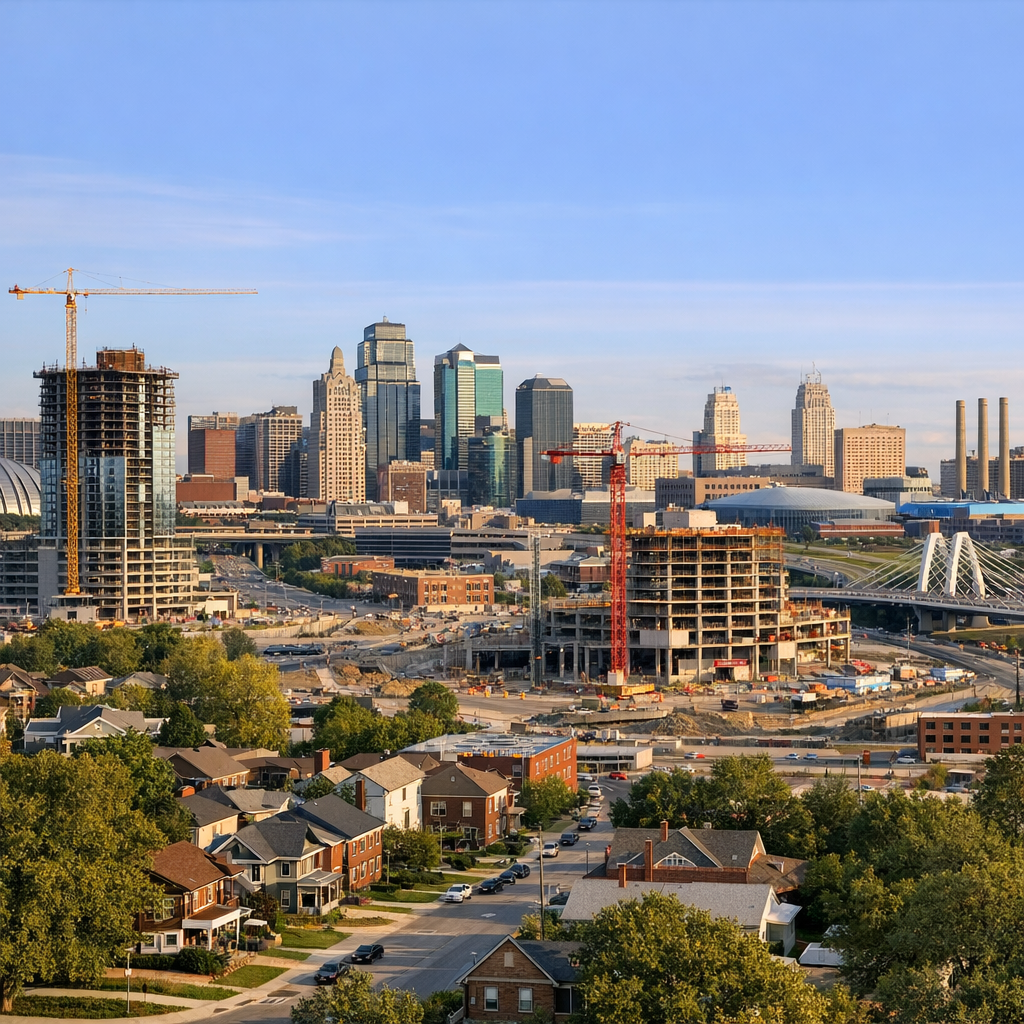
Kansas City’s real estate market is experiencing significant transformations, influenced by rising home prices, increased inventory, and ambitious development projects. Understanding these dynamics is crucial for prospective buyers, sellers, and residents.
Market Trends
As of March 2026, the median sale price for homes in Kansas City reached $291,000, marking a 5.8% increase from the previous year. Homes are selling faster, averaging 34 days on the market compared to 39 days last year. The number of homes sold also rose to 589 in March, up from 533 the previous year. This data indicates a competitive market with strong demand. Source
Inventory levels have seen a notable uptick. Active listings in March 2026 stood at 1,372, a 19.9% increase year-over-year, surpassing the national average growth of 6.2%. This rise in inventory provides buyers with more options, though the market remains competitive. Source
Rental Market
The rental sector mirrors the for-sale market’s competitiveness. The average rent in Kansas City is $1,422, with a year-over-year increase of 3.2%. Despite this rise, Kansas City’s rental prices remain below the national average of $1,910, offering relatively affordable options for renters. Source
Development Projects
Several development initiatives are poised to reshape Kansas City’s urban landscape. The Kansas City Royals have announced plans for a $1.9 billion downtown ballpark as part of a $3 billion mixed-use development in partnership with Hallmark Cards. Located in the Crown Center area, this project aims to enhance downtown connectivity and stimulate economic growth. Source
Additionally, the Downtown Council projects a 33% increase in downtown Kansas City’s population over the next decade, adding approximately 11,000 residents. This anticipated growth underscores the need for expanded housing options and infrastructure to accommodate the influx. Source
Affordable Housing Initiatives
Addressing housing affordability remains a priority. Overland Park has introduced the Portfolio Homes program, featuring predesigned homes and waived permit fees to encourage the construction of diverse housing types. This initiative targets the “missing middle” housing segment, aiming to make homeownership more accessible. Source
Furthermore, Kansas City has launched the Housing Gateway Program, a $1 million initiative designed to eliminate barriers preventing individuals from transitioning from encampments into stable housing. This program reflects a commitment to addressing homelessness with empathy and urgency. Source
In conclusion, Kansas City’s real estate landscape is marked by dynamic changes, including rising home prices, increased inventory, and significant development projects. Staying informed about these trends is essential for navigating the evolving market effectively.