

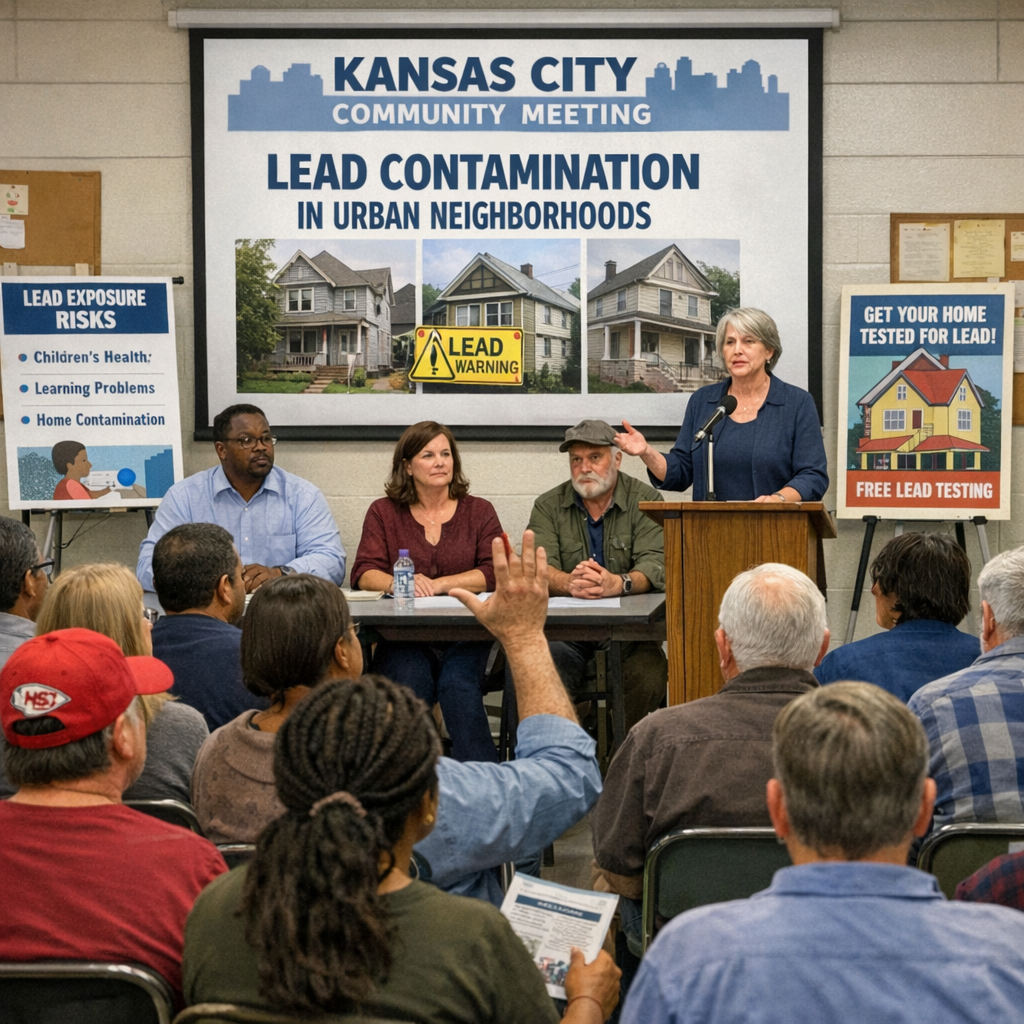
In Kansas City’s older neighborhoods, particularly in the urban core, residents are confronting a persistent issue: lead contamination in the soil. This environmental hazard poses significant health risks and hampers community development efforts.
Understanding the Scope of the Problem
Lead contamination in soil can result from various sources, including the remnants of demolished structures, historical industrial activities, and the use of lead-based paints and gasoline. In Kansas City, approximately 60% to 65% of tested vacant residential properties exceed safe lead levels. This contamination is more prevalent in older neighborhoods, with some areas showing rates above 80%.
Community Impact
For residents like Vanessa and Kenneth Robinson, who discovered high lead levels around their northeast Kansas City home, the contamination has tangible effects. They are unable to let their grandchildren play in their yard or cultivate a garden due to the health risks associated with lead exposure.
City Initiatives and Community Efforts
Recognizing the severity of the issue, Kansas City officials are taking steps to address lead contamination. Councilmember Melissa Patterson Hazley is leading efforts to test and remediate vacant lots using federal brownfields funds. The goal is to clean up these areas to improve public health and encourage economic development.
Community organizations are also playing a crucial role. CleanAirNow, an environmental justice group, is actively involved in monitoring and advocating for the cleanup of contaminated sites, emphasizing the need for environmental justice in affected neighborhoods.
Moving Forward
Addressing lead contamination is a complex challenge that requires coordinated efforts from city officials, community organizations, and residents. By prioritizing testing, remediation, and public education, Kansas City aims to create safer and healthier environments for all its residents.