

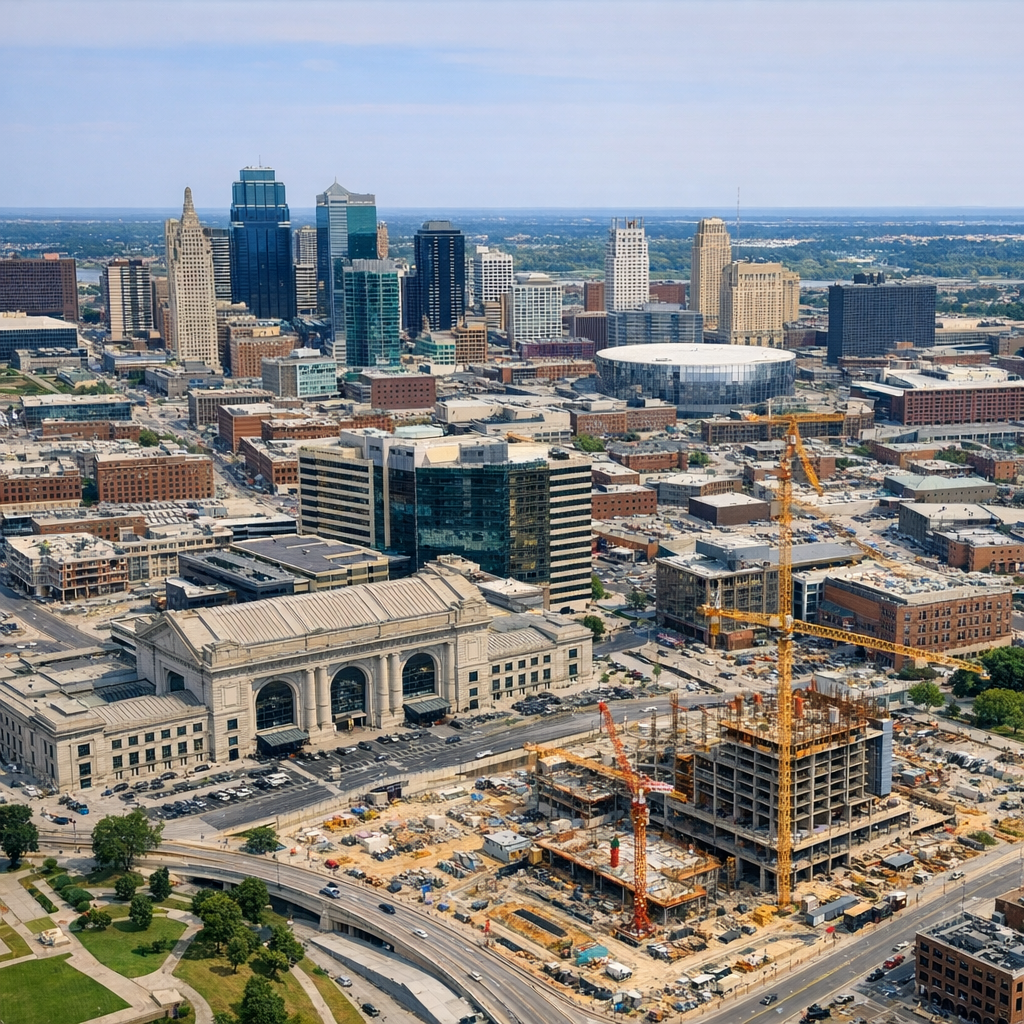
Kansas City’s real estate market is experiencing notable shifts, with trends indicating a move toward a more balanced environment for buyers and sellers alike.
Market Trends
As of March 2026, the median sale price for homes in Kansas City reached $291,000, marking a 5.8% increase from the previous year. Homes are selling faster, averaging 34 days on the market compared to 39 days last year. Additionally, the number of homes sold rose to 589, up from 533 in the same period last year.
Inventory levels have also seen an uptick. Active listings in March stood at 1,372, a 19.9% increase year-over-year, surpassing the national gain of 6.2%. This rise in inventory provides buyers with more options, though demand remains strong.
Housing Developments
Several initiatives are underway to address housing needs and revitalize historic structures. The Mohawk at 15 project, set for completion in May 2026, aims to transform a former parking lot into a mixed-income, multi-family housing development. This transit-oriented community will offer 38 affordable housing units and integrate a bus shelter, enhancing accessibility.
In downtown Kansas City, a 152-year-old building at 10th and Broadway is undergoing revitalization. Originally a drugstore and later Seiden’s Furs during the 1930s, the structure is being repurposed into a Midwestern restaurant called Loretta Jean’s. This project aligns with city preservation efforts and underscores the importance of maintaining Kansas City’s architectural heritage.
Affordable Housing Initiatives
Addressing the affordable housing shortage remains a priority. The Housing Authority of Kansas City has replaced the obsolete Chouteau Courts development with six new mixed-income sites, contributing to the city’s efforts to provide diverse housing options.
Furthermore, the city has launched the Housing Gateway Program, a $1 million initiative aimed at swiftly moving individuals from encampments into stable housing. This program seeks to eliminate practical barriers to housing and reflects a broader effort to address homelessness with empathy and urgency.
Future Outlook
Looking ahead, downtown Kansas City’s population is projected to grow by nearly 33% over the next decade, adding approximately 11,000 new residents. This anticipated growth underscores the need for continued development and housing solutions to accommodate the expanding population.
In summary, Kansas City’s real estate landscape is evolving, with market trends indicating a more balanced environment and various developments and initiatives underway to meet the city’s housing needs. Staying informed about these changes is essential for residents and potential homebuyers navigating the market.