

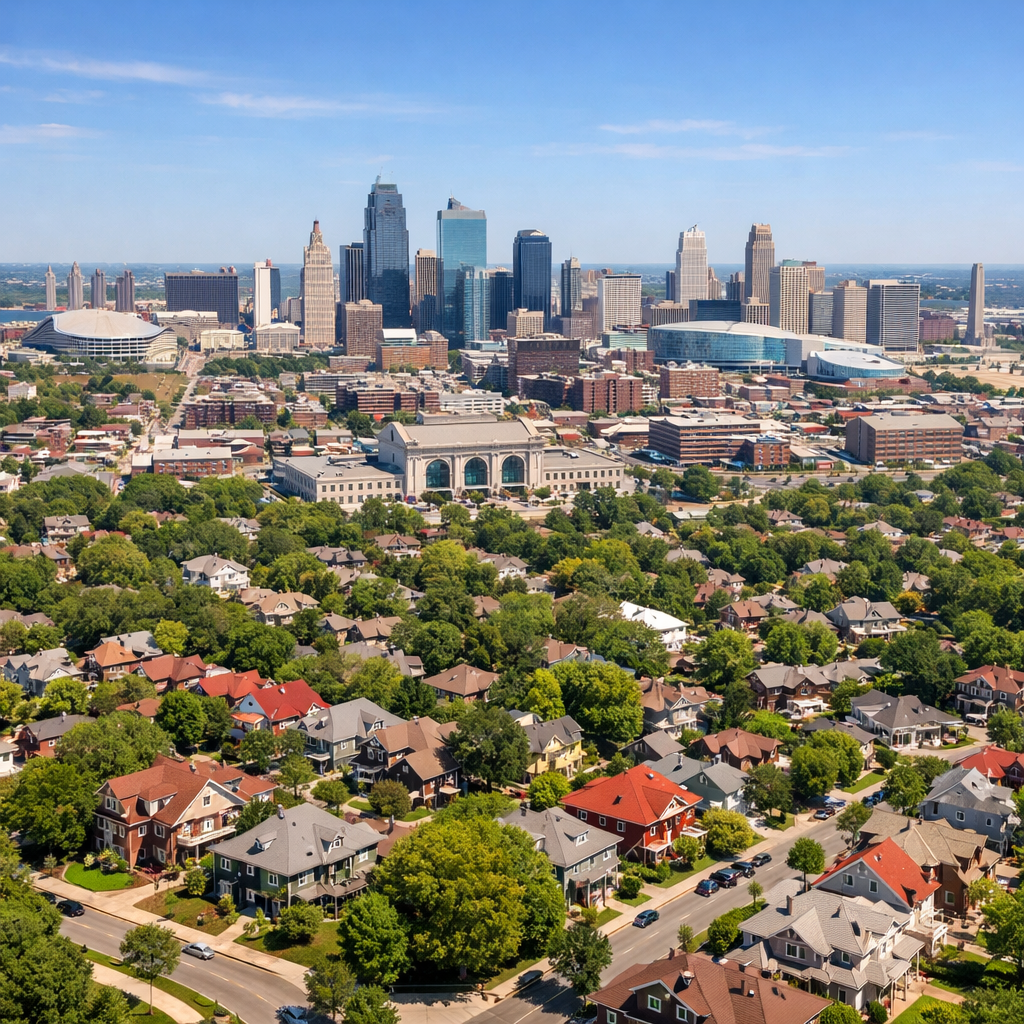
Kansas City’s real estate market is experiencing notable shifts, reflecting broader national trends while maintaining unique local characteristics. Understanding these changes is essential for prospective buyers, sellers, and renters navigating the current landscape.
Market Trends
As of early 2026, the Kansas City housing market has shown signs of balancing. The median sale price for homes has risen to approximately $291,000, marking a 5.8% increase from the previous year. Homes are selling faster, averaging 34 days on the market compared to 39 days last year. Additionally, the number of homes sold has increased by 10.5% year-over-year, indicating sustained demand.
Inventory levels have modestly increased, with about 2.2 months of supply available. This uptick provides buyers with more options, though the market remains competitive. Sellers are receiving approximately 97% of their listing prices, suggesting that while buyers have slightly more leverage, the market still favors sellers.
Rental Market Dynamics
The rental market in Kansas City has also seen significant activity. The median rent has increased by 7.47% year-over-year, reaching approximately $1,612 per month. This rise reflects the growing demand for rental properties, driven by factors such as population growth and the influx of new residents.
Local Developments
Several development projects are underway, aiming to address housing needs and revitalize communities. Notably, the Housing Authority of Kansas City has replaced the obsolete Chouteau Courts development with six new mixed-income sites, contributing to the de-concentration of poverty and providing greater opportunities for residents in various neighborhoods.
Additionally, the Parade Park redevelopment initiative plans to transform an existing 510-unit housing cooperative into a vibrant community with over 1,000 new residential units and substantial open space. This project underscores the city’s commitment to revitalizing neighborhoods and expanding housing options.
Conclusion
Kansas City’s real estate landscape is evolving, characterized by rising home prices, increased rental rates, and significant development projects. Staying informed about these trends is crucial for making well-informed decisions in this dynamic market.